Model-Integrated Concepts: The Easy Way to Showcase Products

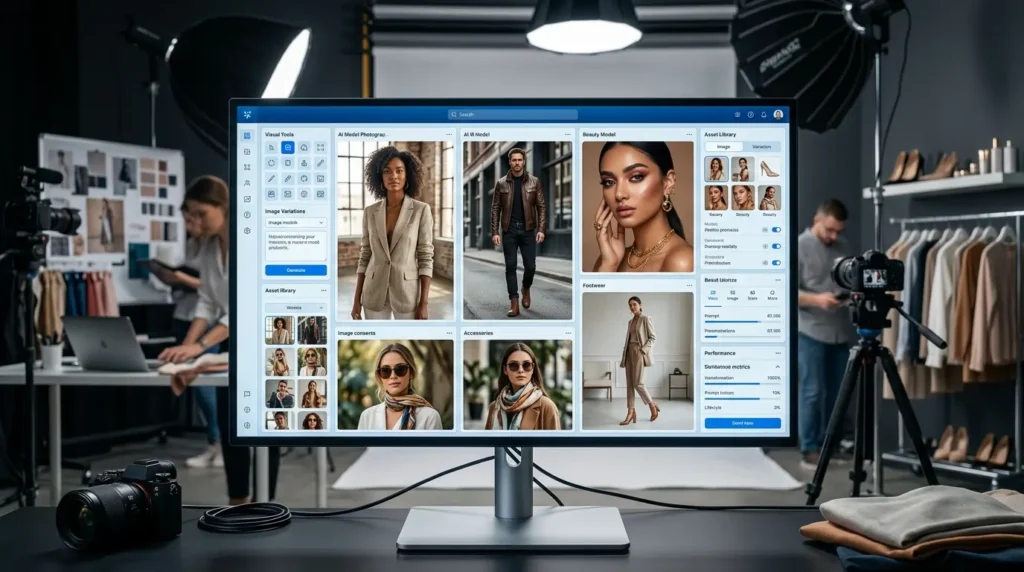
Model-Integrated Concepts help ecommerce brands, fashion businesses, and marketers create realistic product images using AI-generated human models. Instead of organizing expensive photoshoots, brands can showcase products on professional AI models, helping customers understand fit, scale, and real-world usage while reducing production time and costs.
Key Takeaways
- Create realistic AI model photos in minutes.
- Showcase products with natural human context.
- Eliminate the need for traditional model photoshoots.
- Improve customer confidence and product visualization.
- Produce consistent product images across your entire catalog.
Why Human Context Matters in Ecommerce
Customers rarely buy products based only on isolated product images.
They want to know:
- How clothing fits on a person
- How accessories look when worn
- The actual size of a product
- How products appear in everyday situations
- Whether the product matches their lifestyle
Seeing products on real people helps customers imagine themselves using the product.
This additional context often leads to higher confidence, better engagement, and improved purchase decisions.
The Challenges of Traditional Model Photography
Creating lifestyle product photography has traditionally been expensive and time-consuming.
Brands often need to:
- Hire professional models
- Book photographers
- Rent studios
- Arrange makeup and styling
- Coordinate production teams
- Edit hundreds of photos
- Repeat the process for every collection
For growing ecommerce businesses, these costs quickly become difficult to justify.
Launching products also becomes slower because every campaign depends on scheduling photoshoots.
What Are Model-Integrated Concepts?
Model-Integrated Concepts are an intelligent feature within the LovPics creative platform that places products onto realistic AI-generated human models.
Instead of photographing real people, LovPics generates natural-looking model images where products appear professionally worn, carried, or presented.
The AI understands:
- Human anatomy
- Clothing fit
- Body proportions
- Product placement
- Fabric movement
- Lighting consistency
- Natural poses
- Lifestyle presentation
The result is professional ecommerce photography that looks authentic while requiring only a fraction of the traditional production effort.
Why Model-Integrated Concepts Improve Product Marketing
Customers make purchasing decisions more confidently when they can visualize products in realistic situations.
Model-Integrated Concepts help brands:
- Build buyer confidence
- Improve product presentation
- Increase catalog consistency
- Reduce production costs
- Launch products faster
- Create more engaging marketing assets
- Produce scalable visual content
- Strengthen brand identity
Instead of relying on isolated product photos, brands can present products in ways that feel more natural and relatable.
Introducing the HUMAN Framework™
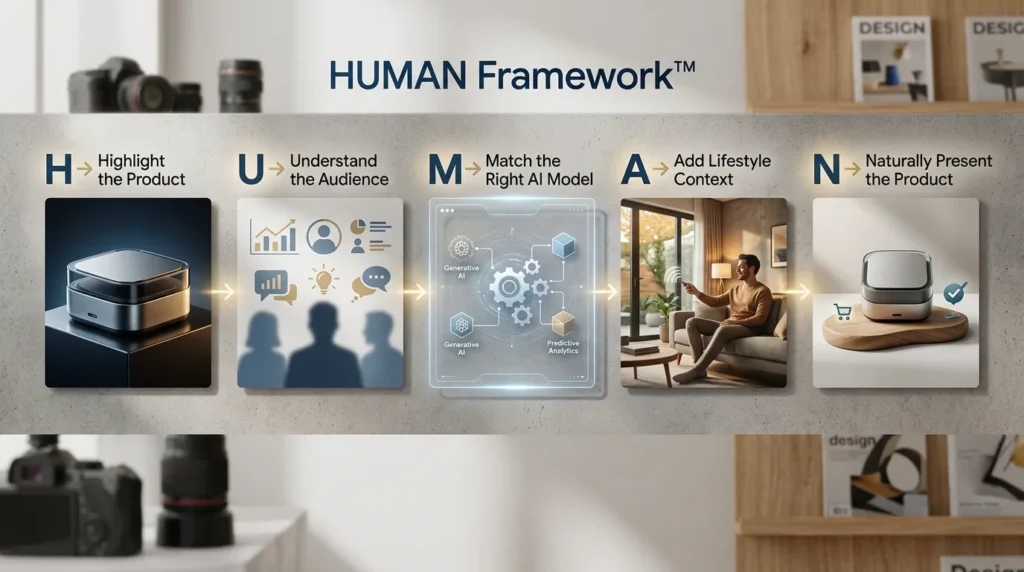
At LovPics, we believe customers connect with products when they can imagine themselves using them. The HUMAN Framework™ helps brands create product visuals that build trust through realistic presentation.
H – Highlight the Product
Begin with high-quality product images that clearly showcase important features and details.
U – Understand the Audience
Select AI models that reflect your target customers and campaign goals.
M – Match the Right AI Model
Generate realistic AI models that naturally complement your products, brand identity, and visual style.
A – Add Lifestyle Context
Place products into realistic environments that help customers understand real-world usage.
N – Naturally Present the Product
Create professional images where products, models, lighting, and composition appear authentic and visually consistent.
How Model-Integrated Concepts Work
The workflow is simple. Upload your product images into LovPics. Next, choose the type of AI model, pose, styling, or lifestyle setting you want to create.
LovPics AI analyzes:
- Product shape
- Size
- Materials
- Fit
- Product category
- Human proportions
- Lighting
- Composition
The AI then generates realistic product images with professional AI models while maintaining natural proportions and consistent presentation.
The finished visuals are ready for ecommerce stores, marketplaces, websites, advertising campaigns, catalogs, and social media.
Why AI Makes Product Presentation Better
Traditional product photography focuses primarily on showing the product itself. Artificial intelligence adds the missing human connection.
By combining realistic AI models with intelligent product placement, brands can create professional lifestyle photography faster than ever before while maintaining consistency across thousands of products.
Whether you’re selling apparel, footwear, jewelry, accessories, beauty products, or lifestyle goods, Model-Integrated Concepts help customers visualize ownership before they make a purchase, improving both the shopping experience and overall marketing effectiveness.
Continue Reading on AI Concepts & Creative Direction
Real-World Applications of Model-Integrated Concepts
Today’s online shoppers want more than product photos. They want to see how products look in real life before making a purchase. Model-Integrated Concepts help brands create realistic lifestyle images that improve customer confidence while reducing production costs.
Model-Integrated Concepts for Fashion Brands
Fashion brands launch new collections throughout the year.
Model-Integrated Concepts help create:
- Apparel catalog images
- Seasonal campaigns
- Lifestyle photography
- Collection launches
- Social media visuals
- Fashion lookbooks
Instead of scheduling multiple photoshoots, brands can generate professional model images within minutes.
Model-Integrated Concepts for Ecommerce Businesses
Online stores benefit from product images that show items in use.
Model-Integrated Concepts help ecommerce brands showcase:
- Clothing on AI models
- Accessories being worn
- Footwear in realistic settings
- Beauty products with lifestyle imagery
- Product bundles
- Marketplace-ready visuals
Customers gain a better understanding of size, fit, and appearance before purchasing.
Model-Integrated Concepts for Jewelry and Accessories
Small products often look more appealing when displayed on people.
AI-generated models help brands present:
- Watches
- Rings
- Necklaces
- Bracelets
- Sunglasses
- Handbags
This provides customers with better scale and visual context.
Model-Integrated Concepts for Marketing Teams
Marketing departments constantly create campaigns for different channels.
Model-Integrated Concepts make it easy to produce:
- Website banners
- Product advertisements
- Social media campaigns
- Email marketing creatives
- Landing page visuals
- Promotional graphics
Every campaign maintains a consistent visual identity.
Model-Integrated Concepts for Creative Agencies
Creative agencies frequently work with multiple brands and product categories.
Using AI-generated models allows agencies to deliver:
- Faster campaign concepts
- Professional client presentations
- Product launch visuals
- Lifestyle marketing assets
- Creative mockups
- Advertising creatives
This reduces production timelines while maintaining high visual quality.
Model-Integrated Concepts Across the LovPics Workflow
The true value of Model-Integrated Concepts comes from their integration with the LovPics creative ecosystem. Rather than generating standalone images, they become part of a complete AI-powered production workflow.
Model-Integrated Concepts integrate seamlessly with:
- AI Product Photography
- AI Fashion Studio
- AI Concept Generator
- AI Creative Director
- Multi-Pose Generation
- Apparel Color Switch
- AI Photoshoot Suite
- AI Graphic Designer
- AI Media Manager
- Bulk Image Export
Together, these tools help businesses move from product images to complete marketing campaigns inside one platform.
Common Product Presentation Mistakes
Showing Products Without Context
Products displayed on plain backgrounds provide limited information. Adding realistic AI models helps customers better understand how products look in everyday situations.
Using Different Models Across Campaigns
Changing models frequently can make catalogs appear inconsistent. Model-Integrated Concepts help maintain a unified visual style across every collection.
Ignoring Customer Perspective
Customers want to imagine themselves using the product. Choose AI models that closely match your target audience to improve engagement.
Inconsistent Lighting
Different photoshoots often produce inconsistent lighting and image quality. AI-generated visuals maintain a consistent look throughout your catalog.
Delaying Product Launches
Waiting for photographers, studios, and models slows product releases. AI-generated model photography allows brands to publish new products much faster.
The Future of AI Product Presentation
Artificial intelligence is transforming ecommerce photography.
Future innovations may include:
- Personalized AI shopping models
- Virtual brand ambassadors
- Interactive lifestyle photography
- AI-generated shopping experiences
- Dynamic product personalization
- Real-time campaign generation
These capabilities will help brands create richer customer experiences while efficiently scaling content production.
Comparison Table
Traditional Model Photography vs Model-Integrated Concepts
| Feature | Traditional Photography | Model-Integrated Concepts |
|---|---|---|
| Model Hiring | Required | Not Required |
| Studio Booking | Required | Not Required |
| Production Speed | Slow | Minutes |
| Product Consistency | Varies | High |
| Lifestyle Context | Yes | Yes |
| Cost | High | Lower |
| Catalog Scalability | Limited | Excellent |
| Best For | Traditional Photoshoots | AI Ecommerce Content |
Decision Matrix
Who Should Use Model-Integrated Concepts?
| Business Type | Recommended |
|---|---|
| Fashion Brands | ⭐⭐⭐⭐⭐ |
| Ecommerce Businesses | ⭐⭐⭐⭐⭐ |
| Apparel Brands | ⭐⭐⭐⭐⭐ |
| Jewelry Brands | ⭐⭐⭐⭐ |
| Accessories Brands | ⭐⭐⭐⭐ |
| Marketing Agencies | ⭐⭐⭐⭐ |
| D2C Brands | ⭐⭐⭐⭐ |
| Small Businesses | ⭐⭐⭐⭐ |
Frequently Asked Questions
What are Model-Integrated Concepts?
Model-Integrated Concepts allow brands to place products onto realistic AI-generated human models, creating professional lifestyle images without traditional photoshoots.
How realistic are the AI models?
LovPics generates highly realistic AI models with natural poses, accurate proportions, realistic lighting, and authentic product placement for professional ecommerce photography.
Can I choose different models?
Yes. You can generate various AI models, poses, demographics, and presentation styles tailored to your target audience and campaign requirements.
Which products work best?
Model-Integrated Concepts work especially well for apparel, footwear, jewelry, handbags, beauty products, fashion accessories, and lifestyle products that benefit from human presentation.
Can I combine this with other LovPics features?
Absolutely. Model-Integrated Concepts integrate with AI Fashion Studio, AI Product Photography, AI Concept Generator, AI Creative Director, Multi-Pose Generation, Apparel Color Switch, AI Photoshoot Suite, AI Graphic Designer, AI Media Manager, and Bulk Image Export.
Why should I use LovPics for AI model photography?
LovPics combines Model-Integrated Concepts, AI Product Photography, AI Fashion Studio, AI Concept Generator, AI Creative Director, Multi-Pose Generation, Apparel Color Switch, AI Photoshoot Suite, AI Media Manager, and Bulk Image Export into one intelligent platform. This enables brands to create realistic AI model photography, accelerate product launches, improve visual consistency, and produce professional ecommerce content without traditional photoshoots.
Conclusion
Customers make better buying decisions when they can see products in realistic human contexts. Traditional model photography delivers this experience, but it often requires significant time, planning, and production costs.
Model-Integrated Concepts help brands create professional product images with realistic AI-generated models in minutes. Whether you’re launching a new fashion collection, building an ecommerce catalog, or creating marketing campaigns, LovPics enables you to showcase products naturally, maintain brand consistency, and scale visual content production while delivering a better shopping experience.